5 min
January 29, 2026
MVP is a key tool that enables entrepreneurs to quickly verify business ideas. This approach...
Learn more 


Artificial intelligence is significantly changing the way software is designed and developed, automating key stages of work, streamlining decision-making, and allowing teams to respond more quickly to changing business and technological requirements.
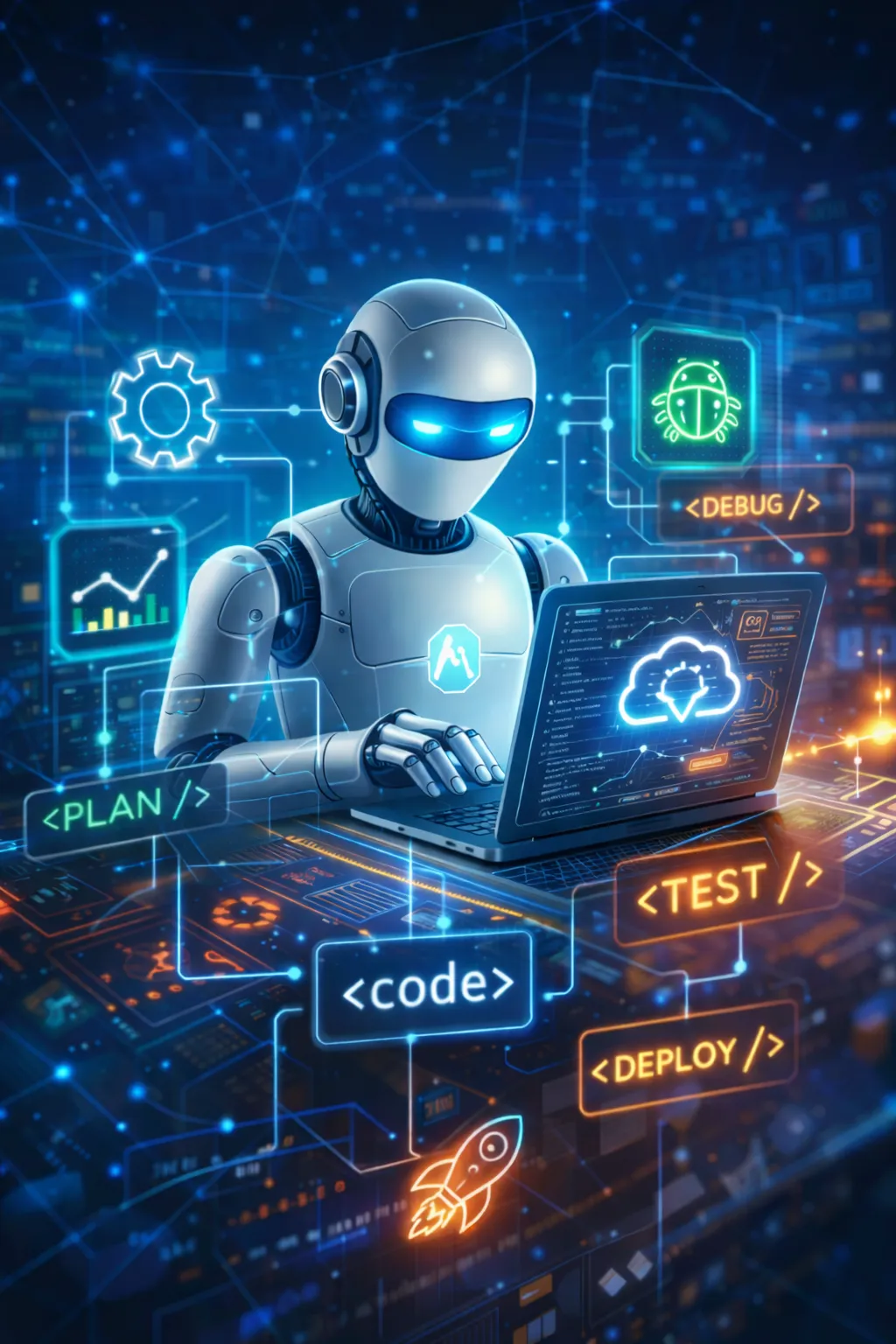
Modern technologies are changing the way we approach software development, and one of the biggest breakthroughs is AI in programming. Thanks to it, processes that once required many hours of manual work can now be performed automatically. Generative AI plays a key role in this transformation by providing tools that enable development automation. This not only streamlines but also accelerates the entire software development cycle. As a result, teams can focus on the more creative aspects of their projects.
AI technologies are revolutionizing various stages of the development process. Among the most important changes are:
This approach allows for the creation of more advanced and scalable solutions, which is crucial in a rapidly changing technological environment.
Generative artificial intelligence is transforming software development on an unprecedented scale. Thanks to it, AI in programming is becoming an integral part of everyday developer tasks. Generative AI enables automatic code generation, which significantly speeds up the process of creating new applications and functionalities. These tools analyze patterns and provide solutions that can be immediately implemented by development teams. As a result, specialists can focus on more advanced tasks.
Development automation, supported by generative AI, is not limited to writing code. Advanced systems are also used for automated testing. Thanks to them, potential errors are identified at an early stage, which minimizes the risk of failures in the production environment. This application of AI makes the entire software lifecycle more efficient and secure. Developers also gain greater flexibility in making decisions based on reliable data and forecasts.
Development automation is becoming the key to fast and effective product implementation and updates. In today’s technology-driven world, where time is critical, AI in programming offers solutions that accelerate every stage of the product lifecycle. Thanks to generative AI, processes such as code compilation and system integration can be completed in a much shorter time. This, in turn, allows development teams to respond quickly to market needs and provide end users with the latest features and fixes.
The use of generative AI also enables effective implementation management. Development automation allows for continuous monitoring and optimization of application performance. Products can be updated in real time, which increases their competitiveness and quality. This allows teams to better manage resources and focus on innovative solutions. This approach not only increases process efficiency, but also increases user satisfaction by providing stable and functional solutions.
AI in programming plays a key role in ensuring software quality, especially in the context of test automation. Thanks to generative AI, the testing process becomes more efficient and accurate. Development automation allows for the creation of advanced test scenarios,które mogą być uruchamiane bez potrzeby ręcznej interwencji. To prowadzi do szybkiego wykrywania błędów i ich eliminacji na wczesnym etapie, co w znaczący sposób zwiększa jakość końcowego produktu.


Generative AI also brings a new dimension to the testing process thanks to its ability to analyze vast amounts of data. These technologies can predict potential problems and suggest optimal solutions, resulting in more stable and reliable applications. Automating development with generative AI also allows for continuous real-time product testing, which is essential in a rapidly changing technology market. This allows teams to focus on innovation, knowing that the quality of their software is under constant control.
The integration of AI into programming is becoming a key element in supporting the daily work of development teams. Generative AI provides tools that automate many aspects of the software development process. This, in turn, allows developers to focus on solving more complex problems and innovating. Artificial intelligence systems can generate code, analyze data, and predict errors, which significantly speeds up the project life cycle. This approach increases team productivity and allows for better resource management.
AI in programming also enables better project management. Development automation allows for real-time progress monitoring and quick response to changing market requirements. As a result, teams can deliver more refined products in less time. The integration of generative AI into the daily work of developers also means access to advanced tools that support communication and collaboration, which in turn leads to a more harmonious and efficient software development process.
Implementing AI in programming comes with many challenges and limitations that development teams must take into account. Although generative AI and development automation offer numerous benefits, such as speeding up processes and increasing efficiency, their implementation can be complicated. One of the main challenges is integrating these technologies with existing systems and processes. This often requires transforming existing structures and training teams, which involves costs and time.
Another limitation is the quality of the generated solutions. AI in programming, despite its advanced nature, sometimes generates results that require additional human verification. Development automation based on generative AI can also encounter difficulties in terms of scalability and flexibility in the face of changing requirements. In addition, ethical issues and data security are becoming increasingly important, requiring additional measures to ensure regulatory compliance and the protection of confidential information.
The future of AI-assisted software development looks bright. AI in programming is becoming an indispensable element that can completely change the way we approach new projects. Generative AI, through its ability to process and analyze data on an unprecedented scale, will enable the creation of solutions tailored to individual user needs. Development automation will allow for even faster and more precise implementation of innovations, which will translate into greater competitiveness and product quality.
In the future, we can expect development teams to rely more and more on AI in their daily work. The emergence of generative AI-based tools may also contribute to the creation of new roles and specializations in the IT industry. Automating development through the use of artificial intelligence will enable a more agile approach to projects, where iterations can be created and tested in real time. Such a transformation will not only speed up the software development process, but also make it more responsive to the dynamically changing needs of the market.